
Warm Season Grass Types: 7 Best Picks for US Lawns by Region
Most thin, patchy Southern lawns don’t have a watering problem. They have a grass problem. Bermuda planted under oak trees, St. Augustine wiped out by one hard freeze, and centipede turning yellow in alkaline soil all come from the same mistake: the wrong grass for the yard.
That mistake costs real money. Warm season sod runs roughly $0.35 to $1.25 per square foot for materials alone, according to our sod installation cost breakdown. Pick wrong, and you pay for the lawn twice.
Here’s the short answer. The seven main warm season grass types for US lawns are Bermuda, zoysia, St. Augustine, centipede, bahia, buffalo grass, and seashore paspalum. The right one comes down to three things: your region, the hours of direct sun your yard gets, and your soil.
What Sets Warm Season Grass Types Apart
Warm season grasses are built for heat. They grow fastest when daytime temperatures sit between 80 and 95°F, and they slow to a crawl once soil temperatures fall into the 50s.
That single trait shapes everything: when you plant, when you feed, and why your yard looks the way it does in January.
How Warm Season Grasses Grow, Green Up, and Go Dormant
These grasses wake up in mid to late spring as the soil warms. They grow hardest through summer, when cool season grasses like tall fescue are struggling. Then, as fall nights cool off, they shut down and turn tan or straw colored.
Here’s the thing: a brown lawn in winter is usually a healthy lawn. That color change is dormancy, a survival mode that protects the roots and runners. The grass greens up again once spring soil warms back up.
The catch is cold. Warm season grasses lack the winter hardiness of northern grasses, so a hard freeze can kill the less hardy types outright. That risk is why the right pick changes so much from Miami to Nashville.
Where Warm Season Grass Types Grow Best in the US
Warm season lawns dominate the southern third of the country. Think Florida, the Gulf Coast, Georgia, the Carolinas, Texas, Arizona, and Southern California.
They also grow in the southern half of the transition zone. That’s the band across the middle of the US, from Virginia and Maryland west through Tennessee, Kentucky, Missouri, and Kansas. Summers there are too hot for many cool season grasses, and winters are too cold for many warm season ones. Only the most cold tolerant warm season grass types survive there long term.
7 Warm Season Grass Types Compared Side by Side
Every warm season grass trades one strength for another. Bermuda takes a beating but hates shade. St. Augustine loves shade but can’t take a hard freeze. Use this table to rule grasses out fast.
Grass | Shade Tolerance | Drought | Salt | Cold | Foot Traffic | Upkeep | Seed or Sod |
|---|---|---|---|---|---|---|---|
Bermuda | Very poor | Excellent | Good | Good | Excellent | High | Both (hybrids sod only) |
Zoysia | Excellent | Good | Good | Very good | Very good | High | Mostly sod or plugs |
St. Augustine | Excellent | Good | Excellent | Poor | Fair | Moderate | Sod or plugs only |
Centipede | Fair | Fair | Poor | Fair | Poor | Low | Both |
Bahia | Poor | Excellent | Very poor | Poor | Good | Low | Both |
Buffalo grass | Poor (needs 6 to 8 hrs sun) | Excellent | Not rated | Very good | Low | Very low | Both |
Seashore paspalum | Poor to fair | Fair to good | Excellent | Very poor | Good | Moderate | Sod or sprigs |
Ratings come from Clemson Extension’s Selecting a Lawn Grass guide, with buffalo grass data from University of Missouri Extension.
Bermuda Grass: The Toughest Warm Season Grass Type for Full Sun
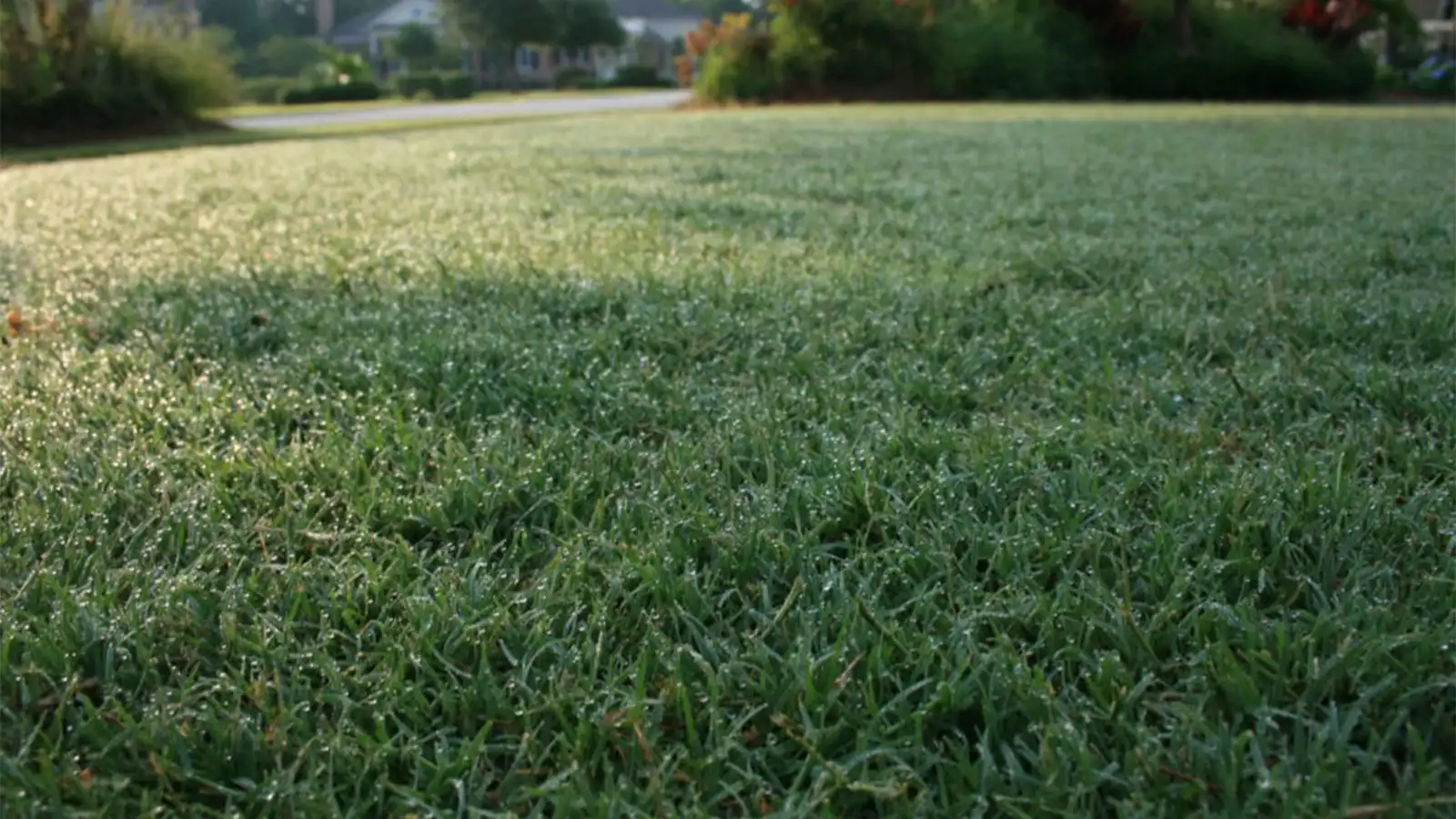
Bermuda is the grass on golf fairways and ball fields for one reason: it recovers from damage fast. It spreads through stolons (runners that creep above ground) and rhizomes (stems that travel underground), so worn spots fill back in on their own.
That same speed has a cost. Clemson Extension notes Bermuda may need mowing twice a week during peak growth, at about ¾ to 1½ inches. It also creeps into flower beds and has very poor shade tolerance, so skip it under trees.
Common Bermuda grows from seed. Premium hybrids like Tifway 419 are sold as sod or sprigs only; our hybrid Bermuda lawn guide covers those varieties in depth.
Best for: Full-sun yards with kids, dogs, and heavy foot traffic.
Zoysia Grass: The Cold-Hardy Pick for the Transition Zone
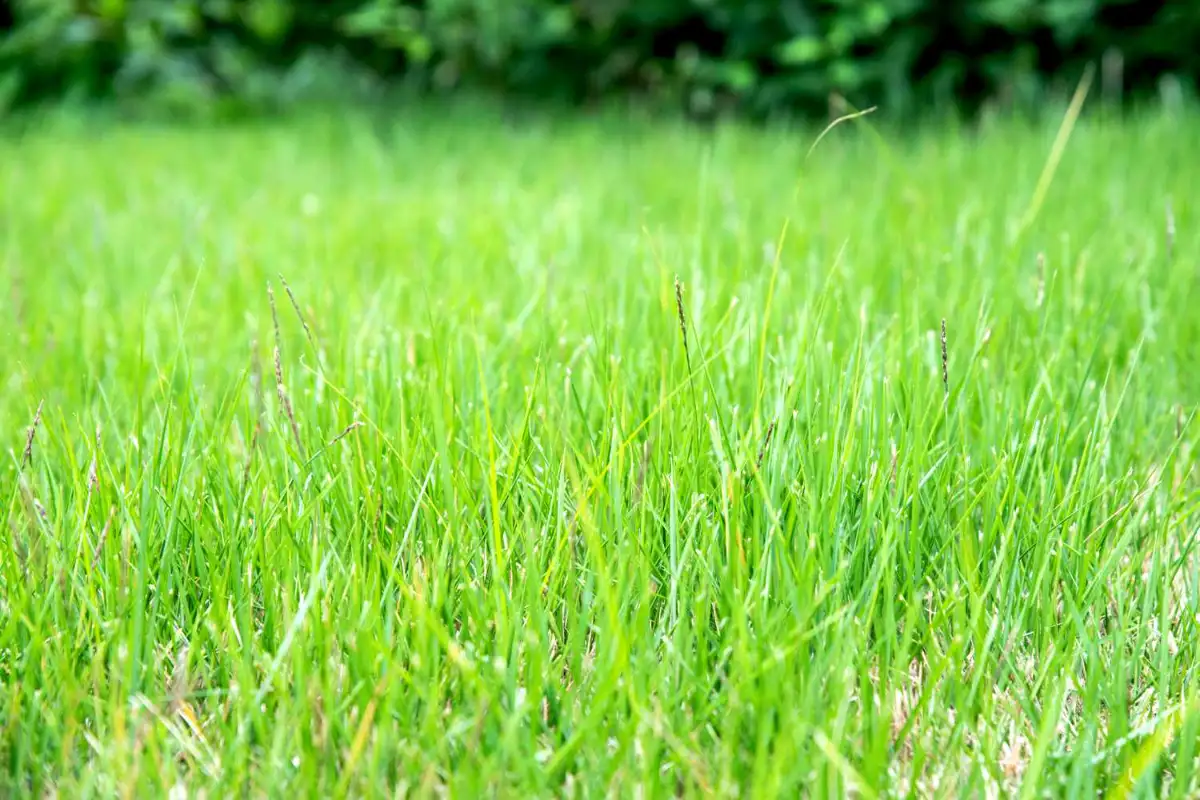
Zoysia forms a thick, soft carpet that feels great barefoot. Its cultivars rank among the most cold tolerant warm season grasses, and Meyer (also sold as Z-52) has been a transition zone standard for decades.
The trade-off is patience. Zoysia spreads slowly, so plugs set 6 inches apart can take up to two growing seasons to fill in. Sod is the smarter route. It also builds thatch, a spongy layer of dead stems and roots between the grass blades and the soil, so plan on dethatching every few years.
Mow most varieties around 2 inches with a rotary mower. Zoysia handles light shade far better than Bermuda.
Best for: Sun to light shade, cooler edges of the South, and homeowners who want a dense, premium lawn.
St. Augustine Grass: The Best Warm Season Grass for Shade
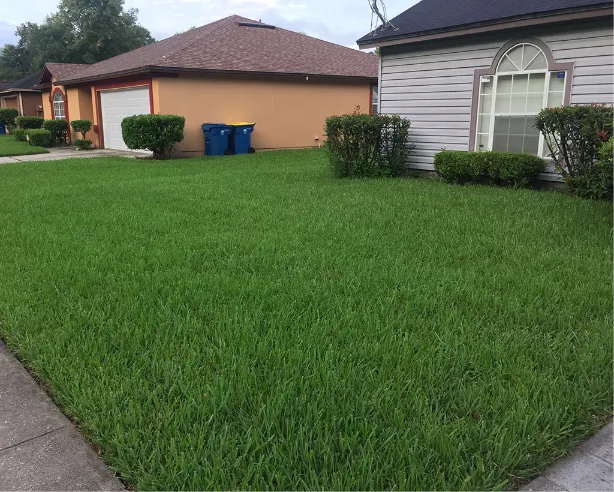
St. Augustine has wide, flat, coarse blades and a blue-green color. It is the most commonly used lawn grass in Florida, and it’s the top warm season choice for yards with trees.
Here’s the catch: you can’t buy it as seed. It goes in as sod, plugs, or sprigs. It also has poor cold tolerance and doesn’t stand up to heavy play. Its biggest pest is the southern chinch bug, a tiny sap-sucking insect that leaves yellow and brown patches in sunny, dry spots.
Mow standard varieties at 3½ to 4 inches and dwarf varieties at 2 to 2½ inches. One warning: the popular Floratam variety needs at least 6 hours of sun, so it isn’t the shade pick.
Best for: Partly shaded lawns in humid, coastal, and Gulf regions.
Centipede Grass: The Low-Maintenance Choice for Acidic Soil
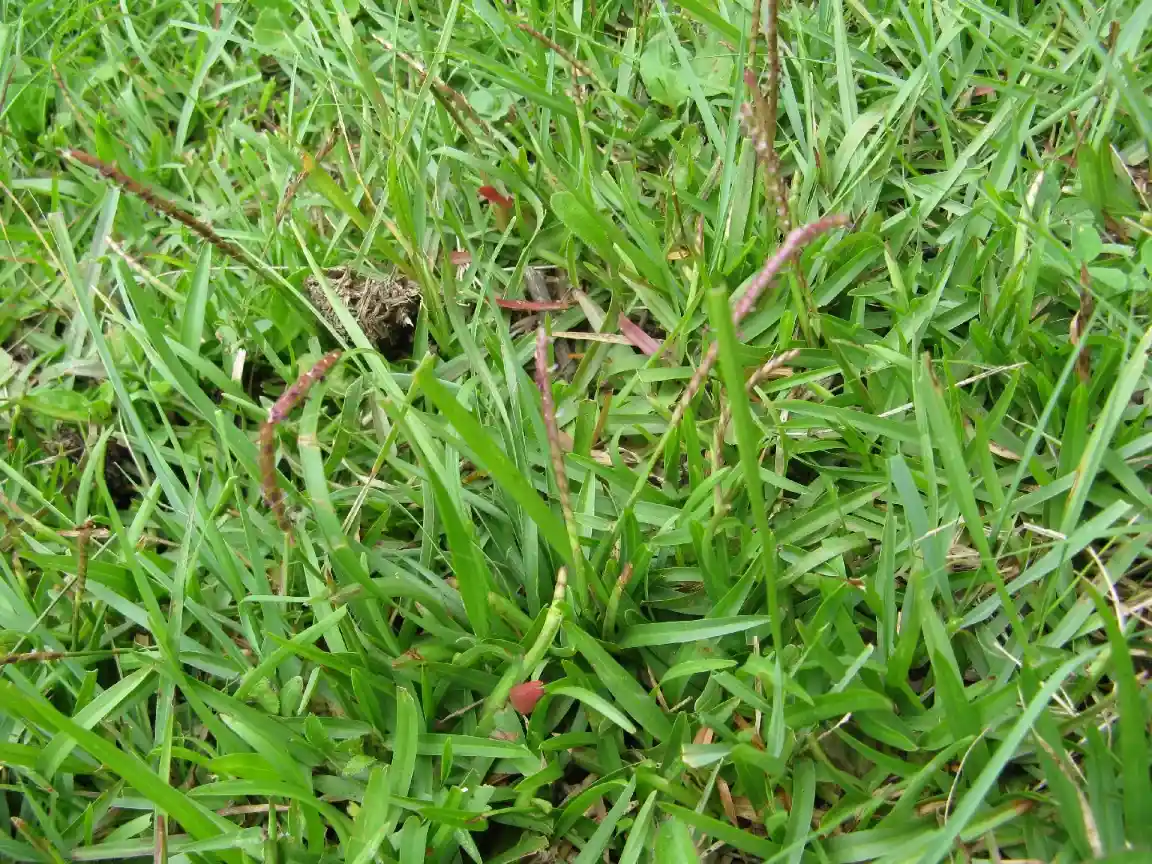
Centipede earned the nickname “lazy man’s grass” because it grows slowly and needs very little fertilizer. Clemson recommends only 0 to 2 pounds of nitrogen per 1,000 square feet a year. Feed it more and it declines.
It thrives in the acidic, infertile soils of the Southeast. In alkaline soil, it suffers from iron chlorosis, a yellowing caused when the grass can’t pull iron from high-pH ground. Keep it at 1½ to 2 inches. It spreads only above ground, which makes edging easy, but it wears poorly and has shallow roots.
If part of your yard stays soggy, carpetgrass is a close cousin that handles wet, acidic soil better.
Best for: Low-traffic Southeast lawns where you want minimal mowing and feeding.
Bahia Grass: Built for Sandy, Poor Soil
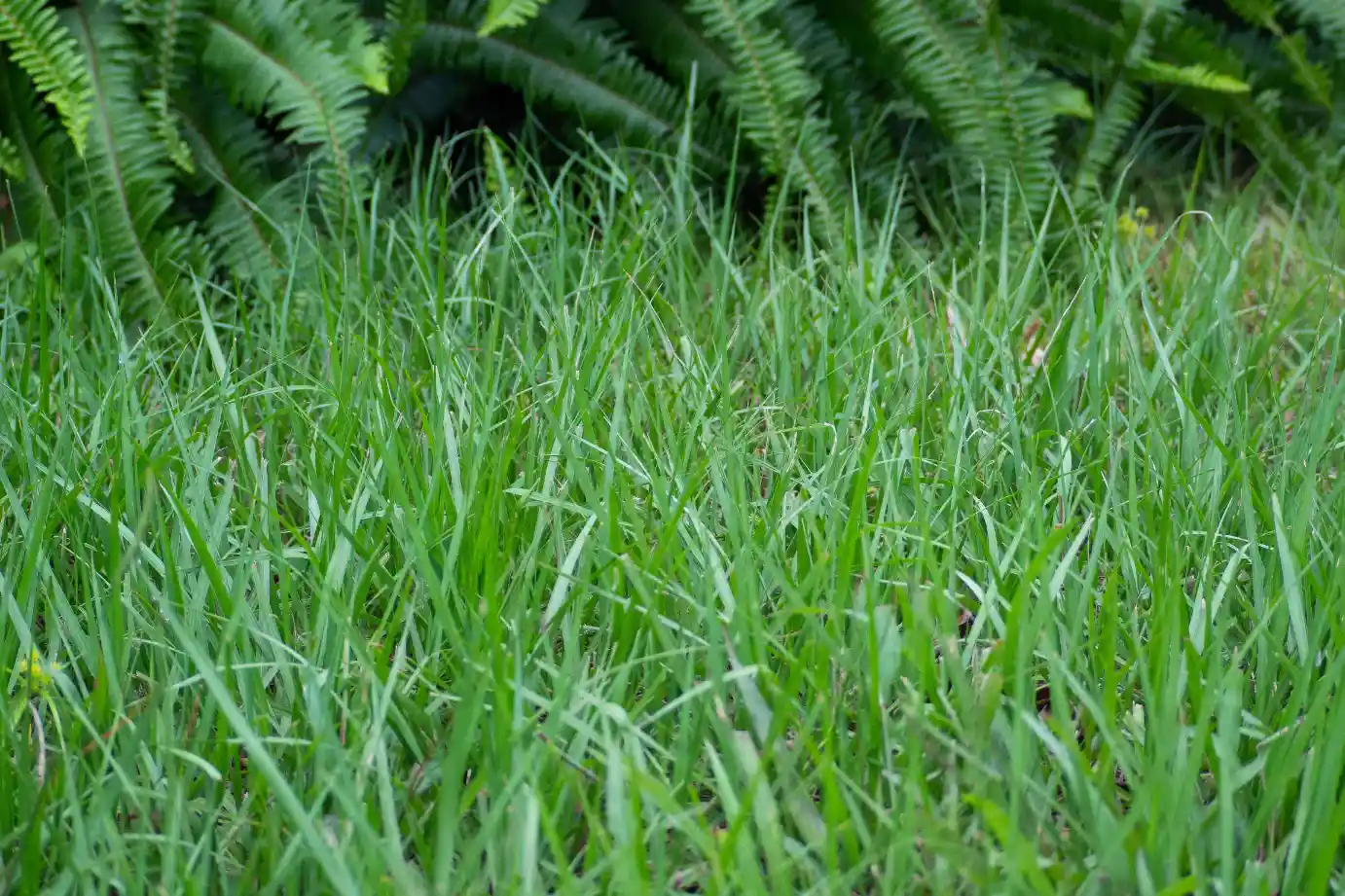
Bahia came from Brazil in 1914 as a pasture grass. It grows an extensive, deep root system that survives in infertile, sandy soils where other grasses struggle.
It won’t give you a carpet look. Bahia forms an open lawn and sends up tall, V-shaped seed heads all summer. Mow at 3 to 4 inches every 7 to 14 days with a sharp, heavy-duty blade, because the stems are tough. Its main pest is the mole cricket, which tunnels under the turf and damages roots.
Best for: Large lots, rural properties, and yards with no irrigation system.
Buffalo Grass: The Native, Low-Water Option
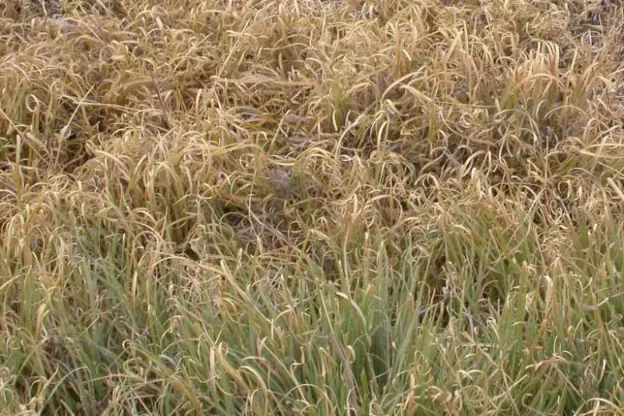
Buffalo grass is the only grass native to North America that’s widely used as turf. It’s one of the most heat and drought tolerant turfgrasses, and it handles cold better than other warm season types.
But wait: it can fail if you baby it. Buffalo grass needs just 1 to 2 pounds of nitrogen per 1,000 square feet a year, and overwatering invites weeds. It needs 6 to 8 hours of direct sun and doesn’t love humid climates. Mow at 2 to 3 inches for a neat look, or 3 to 4 inches every few weeks for a natural one.
Best for: The Great Plains, dry western states, and homeowners cutting water use.
Seashore Paspalum: The Salt-Tolerant Coastal Specialist

Most grasses die in salty soil. Seashore paspalum thrives in salt-affected sites, which makes it the answer for oceanfront homes and lawns watered with brackish or reclaimed water.
It has very poor cold tolerance, so it only works in the warmest coastal areas. It’s planted from sod or sprigs and mowed low, around 1 to 1½ inches. Supply is limited compared to Bermuda or St. Augustine, so check local sod farms first.
Best for: Beachfront yards and high-salt irrigation water.
Best Warm Season Grass Types by US Region
Your region narrows the field more than anything else. Start with this quick match, then read the section for your area.
Region | Top Picks | Why They Win |
|---|---|---|
Southeast and the Carolinas | Centipede, Bermuda, zoysia | Acidic soils, humid summers |
Florida and the Gulf Coast | St. Augustine, bahia, zoysia, seashore paspalum | Sandy or salty soils, mild winters |
Texas and the South Central states | Bermuda, zoysia, St. Augustine, buffalo grass | Rainfall swings from wet east to dry west |
Desert Southwest and Southern California | Hybrid Bermuda, zoysia, buffalo grass | Extreme heat, low rainfall, alkaline soils |
Transition zone | Zoysia, cold-hardy Bermuda | Cold winters that kill tender grasses |
Southeast and the Carolinas
The Southeast has acidic, often sandy soil, and that’s centipede country. Clemson Extension notes centipede is well adapted to the coastal plains and lower Piedmont. Just keep it out of shaded, north-facing slopes in the Piedmont, where it tends to suffer winter kill.
For sunny yards that see heavy use, Bermuda is the standard. Zoysia fills the gap for yards with partial shade or homeowners who want a denser, softer lawn. Georgia homeowners who want something truly native can explore our guide to native Georgia grasses.
Florida and the Gulf Coast
St. Augustine rules here, and Floratam is the variety you’ll see most. It needs full sun and has the poorest cold tolerance of its group, so North Florida and Panhandle homeowners should look at cold-hardier cultivars like Raleigh.
Many coastal soils are sandy and high in pH. Bahia handles sandy ground with almost no inputs, and centipede is best suited to North Florida and the Panhandle. If you live right on the water, seashore paspalum or a salt-tolerant zoysia beats everything else.
Texas and the South Central States
Texas is really three lawn climates. According to Texas A&M AgriLife’s Turfgrass Selection for Texas, Bermuda grows statewide, St. Augustine performs best in Southeast Texas, and severe winters can kill St. Augustine in the northern third of the state.
Buffalo grass works best where annual rainfall is 25 inches or less, which points to Central and West Texas. Centipede fits East Texas, and seashore paspalum fits the southern third.
Want green grass through a Texas winter? Bermuda can be overseeded, but St. Augustine usually shouldn’t be. Our guide to overseeding with ryegrass in Texas has the exact dates by region.
Desert Southwest and Southern California
In the low desert around Phoenix, Tucson, and Yuma, University of Arizona Extension calls Bermuda the best adapted turfgrass for the heat and its water needs. It turns blonde after a run of frosty nights, which is why many desert lawns get overseeded with ryegrass each October.
Here’s the thing: water is the real limit. A dormant, non-overseeded Bermuda lawn needs very little winter irrigation, so skipping the overseed saves real money. At higher elevations, native buffalo grass is worth a look.
In the driest spots, a lawn may not be the right answer at all. Our natural grass vs artificial turf breakdown compares costs and water use by region.
Warm Season Grass Types for the Transition Zone
The transition zone punishes tender grasses. St. Augustine and centipede only hold up along its warmest southern edge, which leaves zoysia and cold-hardy Bermuda as the smart picks for most yards.
Meyer zoysia remains a proven choice. For Bermuda, look for varieties bred for winter hardiness, such as Yukon, Riviera, or the Kansas-bred Midiron family, all noted by Clemson Extension for their cold tolerance.
Timing matters more here than anywhere else. Plant too late in summer and the grass goes dormant before its roots are ready, then dies over winter. Our guide on when to lay zoysia sod breaks down the safe window by region. In heavily shaded yards near the northern edge, a cool season grass like tall fescue is often the better choice.
How to Choose Between Warm Season Grass Types for Your Yard
Once your region shortens the list, four questions settle it. Answer them honestly and the right grass usually picks itself.
Count Your Sun Hours First
Sunlight rules out more grasses than any other factor. Mississippi State Extension’s shade guide ranks Bermuda as needing the most light of any maintained turfgrass. St. Augustine, the most shade tolerant warm season grass, gets by on roughly 4 hours of direct sun or a full day of filtered light.
Here’s how to check: on a clear weekend day, note every hour whether each part of the lawn sits in sun or shade. Six or more hours opens up every option. Four to six hours points to St. Augustine or zoysia. Under four hours, no grass will thrive, so mulch or a groundcover is the better call.
Test Soil pH Before You Buy
A soil test costs little and can save you a failed lawn. It tells you your soil pH (how acidic or alkaline it is) plus which nutrients are missing.
Most turfgrasses do best at a pH of 6.0 to 6.5, while centipede prefers a more acidic 5.5 to 6.0. Centipede and bahia turn yellow in alkaline soil. Bermuda, zoysia, and St. Augustine handle a much wider range.
To sample, pull 8 to 10 small cores from the lawn, each 2 to 4 inches deep, and mix them into one bag. Your county extension office can send it to a lab.
Be Honest About Mowing Time
Clemson Extension defines a high-maintenance lawn as one that needs monthly feeding, mowing twice a week, and yearly dethatching. A low-maintenance lawn gets fertilized no more than twice a year and mowed only as needed.
By that measure, Bermuda and zoysia sit at the high end. St. Augustine and seashore paspalum fall in the middle. Centipede, bahia, and buffalo grass are the low-effort picks.
Here’s why that matters: a demanding grass on a lazy schedule looks worse than an easygoing grass that gets exactly what it needs.
Seed, Sod, or Plugs: What Each Warm Season Grass Type Needs
You can grow common Bermuda, centipede, bahia, and buffalo grass from seed, along with a few zoysias like Zenith. St. Augustine, hybrid Bermuda, and most zoysia varieties only come as sod, plugs, or sprigs because their seed isn’t available or doesn’t grow true to type.
Timing is the same for all of them. Plant from late spring through early summer, once soil temperatures stay above 65°F. Seed costs far less, while sod gives you an instant lawn and fewer weeds. Our sod vs seed guide compares both, including why most pros in the transition zone choose sod.
Frequently Asked Questions About Warm Season Grass Types
What is the most common warm season grass in the US?
Bermuda is one of the most widely planted warm season grasses in the country. It grows statewide in Texas and is Mississippi’s preferred turfgrass. Florida is the exception, where St. Augustine is the most common lawn grass.
Which warm season grass grows best in shade?
St. Augustine is the most shade tolerant warm season grass, followed by zoysia. It still needs about 4 hours of direct sun or a full day of filtered light. Bermuda has the poorest shade tolerance of the group.
What is the most cold tolerant warm season grass?
Zoysia, especially Japanese types like Meyer, ranks among the most cold tolerant warm season grasses. Buffalo grass also handles cold well. Cold-hardy Bermuda varieties come next, while St. Augustine and seashore paspalum have the poorest cold tolerance.
When is the best time to plant warm season grass?
Plant in late spring through early summer, once soil temperatures stay above 65°F. That gives roots a full growing season before winter dormancy. In the transition zone, avoid planting in late summer or fall.
Can you mix different warm season grass types in one lawn?
It usually doesn’t work. Aggressive grasses like Bermuda tend to crowd out zoysia and St. Augustine over time, leaving a patchy look. Pick one grass per lawn area and match it to that spot’s sun and soil.
Choosing the Right Warm Season Grass Type
The best warm season grass is the one that matches your yard, not the one your neighbor planted. Keep these points in mind:
- Sun decides first. Bermuda needs full sun, while St. Augustine and zoysia handle partial shade.
- Region narrows the list. Centipede fits the Southeast, St. Augustine the Gulf Coast, Bermuda the desert, and zoysia the transition zone.
- Soil pH matters. Centipede and bahia need acidic soil; Bermuda, zoysia, and St. Augustine are more flexible.
- Upkeep should match your schedule. Centipede, bahia, and buffalo grass are low effort; Bermuda and zoysia demand more.
- Timing is fixed. Plant in late spring or early summer once soil stays above 65°F.
Your next step: count your sun hours this weekend, send off a soil test, and shortlist two grasses from your region’s row in the table above. Going with sod? Our sod installation guide walks you through the job from bare soil to first mow.
About Author
Khalid Fazal is a seasoned lawn care specialist and horticultural researcher with over 15 years of hands-on experience transforming challenging landscapes into lush, resilient green spaces. His journey didn’t start in a lab, but in a backyard full of stubborn, cracked clay that “experts” said would never grow a healthy blade of grass. Refusing to accept a yard full of dust, Khalid spent years experimenting with organic soil restoration and precise mulching, eventually turning that wasteland into a neighborhood showpiece on a shoestring budget.
From mastering core aeration techniques to optimizing soil pH for specialized turf varieties, Khalid’s approach combines old-school grit with modern agronomic science. He founded Gen Lawn to provide homeowners with honest, research-backed advice that prioritizes long-term soil health over quick-fix chemical solutions. When he isn’t analyzing soil profiles, he’s developing precision tools to help others achieve professional results without the professional price tag.

Drought Resistant Grasses for Lawns [8 Picks by US Region]
Table of Contents Home / By Khalid Fazal | Updated:...
Read More
Shade Tolerant Grass: 7 Best Types by Region [Sun Hours]
Table of Contents Home / By Khalid Fazal | Updated:...
Read More
7 Types of Cool Season Grass: Best Picks by Region [2026]
Table of Contents Home / By Khalid Fazal | Updated:...
Read More
Warm Season Grass Types: 7 Best Picks by US Region [2026]
Table of Contents Home / By Khalid Fazal | Updated:...
Read More