
Drainage Solutions for Your Yard: 7 Fixes That Actually Work (With Real Costs)
You already know the feeling. Rain hits overnight, and by morning your yard looks like a shallow pond. The soggy patch in the corner has been yellow and waterlogged for weeks. Every time you mow, you leave boot marks and ruts in the mud.
Here is the thing: standing water is not just an eyesore. It kills grass at the roots, turns your lawn into a mosquito breeding ground, and if it sits close to your foundation, it starts threatening the structural integrity of your home. According to HomeAdvisor, homeowners pay an average of $4,620 to install a drainage system once the problem is serious. Early intervention costs a fraction of that.
The good news? Most yard drainage problems are fixable, and you do not always need to tear up your entire lawn to solve them. This guide walks you through 7 proven drainage solutions for your yard, ranked from easiest to most involved, with honest 2025 and 2026 cost estimates and a clear breakdown of what you can tackle yourself versus what is worth handing to a professional.
Let us start with diagnosis, because the right fix depends entirely on knowing what you are dealing with.
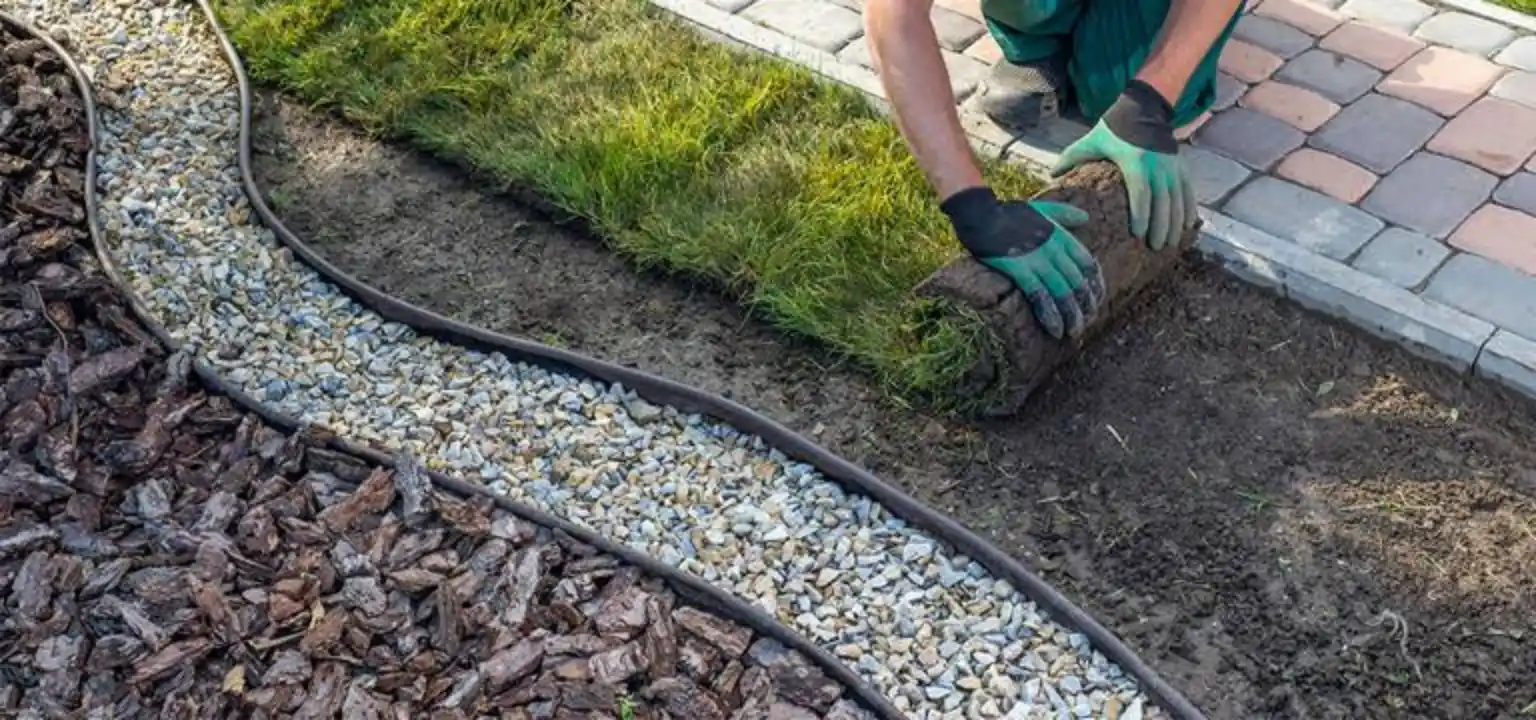
Why Your Yard Will Not Drain (And How to Figure Out the Problem)
Before you spend a dollar or dig a single hole, you need to understand what is causing your drainage problem. Treating the symptom without knowing the cause wastes both time and money.
Here are the most common culprits.
Common Causes of Yard Drainage Problems
- Compacted soil: Heavy foot traffic and lawn equipment press soil particles together, leaving no room for water to move through. Soil compaction is one of the leading drainage killers in residential yards.
- Clay-heavy soil: Clay soil holds water like a sponge and releases it very slowly. If your area has a lot of clay, drainage will always be sluggish without some form of intervention.
- Negative grading: This means your yard slopes toward your house instead of away from it. Rainwater follows that slope directly to your foundation.
- Downspout discharge problems: A short or poorly aimed downspout dumps water faster than the soil can absorb it, creating localized pooling right where you do not want it.
- Hardscape runoff: Driveways, patios, and walkways are impervious surfaces. Water that cannot soak into concrete or pavers has to go somewhere, and it often ends up flooding the nearest lawn area. If you are planning new hardscape features, drainage planning should be part of the design from day one.
- Thatch buildup: A thick layer of dead grass and decomposing organic debris sits between the living grass and the soil, physically blocking water from penetrating the ground.
Run This Simple Diagnostic Test Before You Do Anything Else
This is called a percolation test, and it takes about 10 minutes. It tells you exactly how fast your soil drains, and it points you toward the right solution before you spend a cent.
Here is how to do it:
- Dig a hole approximately 12 inches deep and 12 inches wide in the problem area of your yard.
- Fill the hole with water and let it drain completely.
- Refill the hole immediately and note the starting depth with a ruler or measuring tape.
- Check back in one hour and measure how many inches of water have drained away.
Reading your results:
- 1 to 3 inches per hour: Healthy drainage rate. Your problem is likely above-ground, such as grading or downspout positioning.
- Under 1 inch per hour: Compaction or clay issue. You need soil amendment, aeration, or a subsurface drainage system.
- Over 4 inches per hour: Soil drains too fast. This is usually a drought-related problem rather than a flooding issue.
Now that you have your diagnosis, here are your solutions.
7 Drainage Solutions for Your Yard, From Easiest to Most Involved
Work through this list in order. Many homeowners solve a chronic soggy yard problem within the first two or three steps without ever needing a major installation.
1. Extend or Redirect Your Downspouts
Start here. Always.
Before digging anything or calling anyone, walk around your home during or right after a rainstorm and watch where the water is actually coming from. A surprising number of yard drainage problems trace back to a single downspout dumping water directly against the foundation or into a low corner of the yard.
A downspout extension or flexible elbow redirects that discharge 6 to 10 feet away from the house and into a better drainage zone. It is a $10 to $50 fix that takes under an hour and requires nothing more than basic tools.
Best for: Localized pooling near the foundation or corners of the yard DIY difficulty: Very easy Cost: $10 to $50 in materials
2. Aerate and Amend the Soil
If your percolation test came in under 1 inch per hour and you have compacted or clay-heavy soil, core aeration is your next move. A core aerator pulls small cylindrical plugs out of the ground, creating channels for water and air to move through the soil layer.
After aerating, top-dress with compost. The University of Maryland Extension recommends working toward at least 2 percent organic matter content in lawn soil. Compost improves soil structure over time, opening up pore space that allows water to drain at a healthy rate.
Not sure which material to use for soil amendment? The GenLawn guide on mulch vs soil breaks down exactly which products help drainage and which ones compound the problem.
Best for: Compacted soil, clay-heavy lawns, mild drainage lag after rain DIY difficulty: Easy. Core aerators are available at most equipment rental shops for $60 to $100 per day. Cost: $20 to $100 (DIY); $75 to $250 per visit (professional service)
3. Regrade Your Yard
Regrading means reshaping the slope of your yard so water flows away from your foundation rather than toward it. The standard recommendation from drainage professionals is a minimum slope of 2 percent, which works out to roughly 2 inches of drop for every 10 feet of yard, measured away from the house.
For small areas, you can add topsoil and reshape the slope yourself using a landscape rake and a line level. Larger projects, or anything involving regrading close to the foundation, are worth bringing in a professional for.
Best for: Negative grading, flat yards with no natural slope, foundation pooling DIY difficulty: Moderate for small areas. Professional recommended for larger reshaping projects. Cost: $50 to $200 (DIY, equipment rental plus topsoil); $800 to $4,000 (professional, depending on yard size and soil conditions)
4. Build a Dry Creek Bed
Here is a solution that solves a drainage problem and adds real curb appeal at the same time.
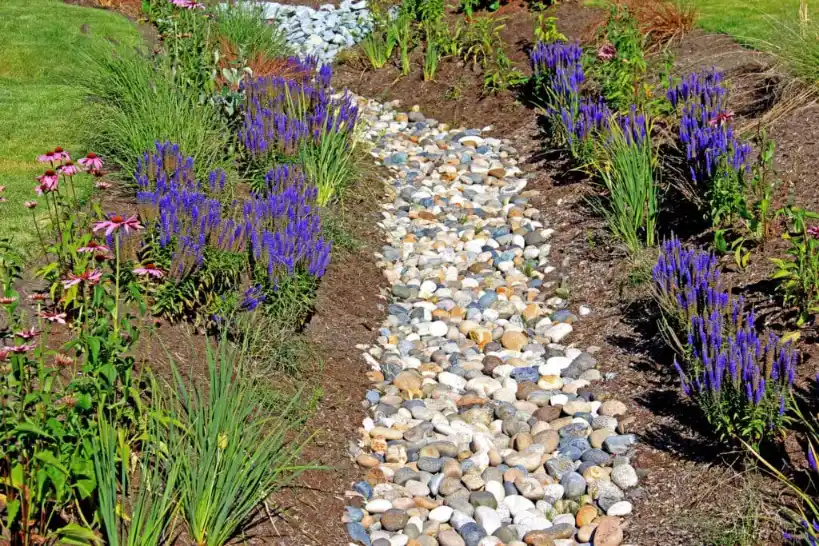
A dry creek bed is a shallow, rock-lined channel that mimics a natural stream. It guides surface water away from low spots and channels it toward a more appropriate drainage area. During dry weather it reads as a landscape feature. During rain it functions as a surface drain.
You control the route. Dig a gradual swale (a shallow, gently sloping trench), line it with landscape fabric, fill it with gravel or river rock, and direct it toward a downhill corner, a rain garden, or the street edge.
Best for: Sloped yards, visible surface runoff, yards where water moves across the lawn in wide sheets DIY difficulty: Easy to moderate. A satisfying weekend project for most homeowners. Cost: $100 to $300 (DIY materials); $500 to $2,000 (professional installation)
5. Install a French Drain
When surface fixes are not enough, a French drain is the most reliable and widely used underground drainage solution for residential yards.
A French drain is a perforated pipe buried in a gravel-lined trench. Water seeps into the gravel, enters the pipe through small holes, and is carried to a lower discharge point away from the problem area. It is completely invisible once installed and, when done correctly, can last 30 to 40 years.
The catch is that it involves real excavation work, precise slope calculations, and careful navigation around underground utilities. This is not a casual dig. Before any underground work on your property, call 811 to have utility lines marked. The service is free, fast, and legally required in all 50 US states.
For a complete breakdown of French drain installation, materials, costs, and contractor selection, the GenLawn French drain guide covers everything you need in one place.
Best for: Chronic wet zones, soggy areas near the foundation, clay soil with severe absorption problems DIY difficulty: Challenging. Most homeowners hire this out for good reason. Cost: $200 to $500 (small DIY project); $1,650 to $12,250 (professional installation, with a national average around $5,000)
6. Add a Catch Basin or Channel Drain
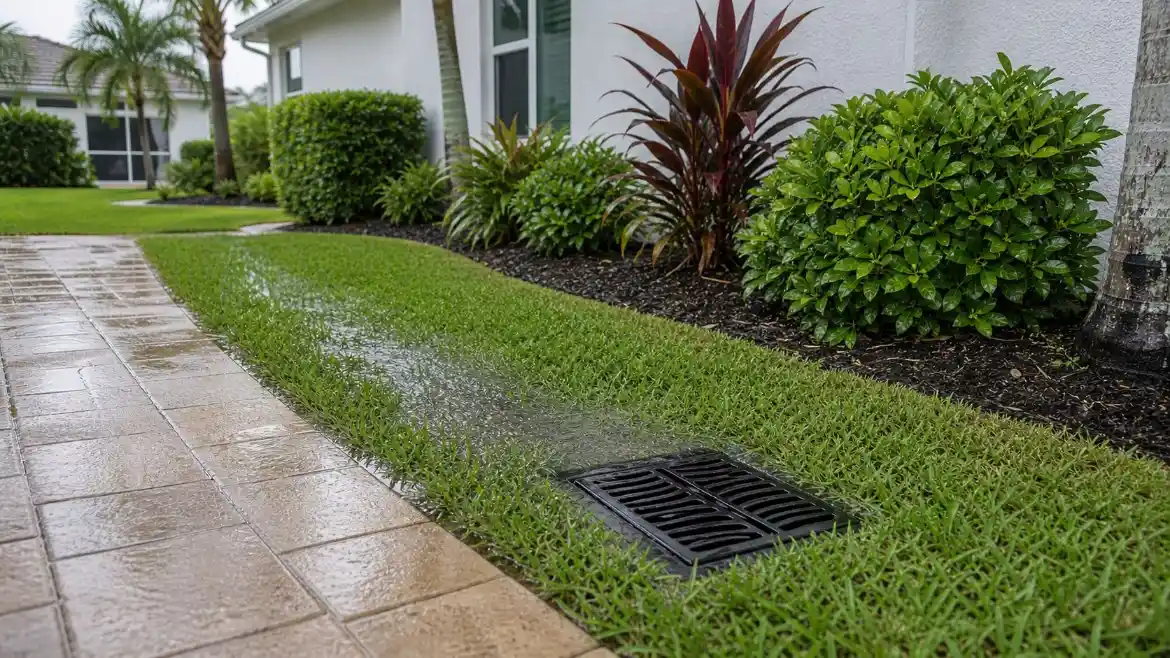
Got a drainage problem specifically on or near a driveway, patio, or other hardscape surface? This is where catch basins and channel drains earn their place.
A catch basin is a surface inlet, usually a grated box, set into a low point in your yard or paved area. Water collects in the basin and exits through a connected underground pipe. A channel drain (also called a trench drain) is a linear version placed across a driveway edge or patio border.
Both options require precise slope to function correctly, and they need properly routed underground pipe to discharge water to an appropriate location. Professional installation is the better call here unless you have solid plumbing and excavation experience.
Best for: Hardscape runoff, driveway flooding, water pooling at patio edges DIY difficulty: Challenging. Professional recommended for correct slope and pipe routing. Cost: $240 to $600 (catch basin unit alone); $800 to $2,500 (professional installation including piping)
7. Build a Rain Garden
A rain garden is a planted depression in your yard designed to collect runoff and let it soak into the ground naturally, filtered through plant roots and soil. The EPA recommends rain gardens as one of the most effective residential stormwater management tools available to homeowners.
Rain gardens work best when sited at least 10 feet from the foundation in a natural low point where water already tends to collect. Fill with deep-rooted native plants that can handle both temporary flooding and dry spells between rain events. Native species are the best choice because they are already adapted to your local rainfall patterns and soil conditions, and they require no supplemental irrigation once established.
Rain gardens are not the right fix for severe drainage failures. But for moderate problems, they are beautiful, low-maintenance, and genuinely good for the environment.
Best for: Moderate drainage issues, runoff management, homeowners looking for an eco-friendly approach DIY difficulty: Easy to moderate. Manageable as a weekend project. Cost: $1 to $5 per square foot (DIY); $10 to $20 per square foot (professional installation)
What Do Drainage Solutions for Your Yard Actually Cost?
Here is the full picture in one place. All figures reflect 2025 and 2026 US national averages sourced from HomeAdvisor, LawnLove, and LawnStarter.
| Solution | DIY Cost | Professional Cost |
|---|---|---|
| Downspout extension | $10 to $50 | $150 to $350 |
| Lawn aeration and compost | $20 to $100 | $75 to $250 per visit |
| Yard regrading | $50 to $200 | $800 to $4,000 |
| Dry creek bed | $100 to $300 | $500 to $2,000 |
| Rain garden | $1 to $5 per sqft | $10 to $20 per sqft |
| Catch basin or channel drain | $100 to $300 materials | $800 to $2,500 installed |
| French drain | $200 to $500 (small project) | $1,650 to $12,250 (avg $5,000) |
| Full drainage system | $500 to $2,000 | $2,145 to $7,162 (avg $4,620) |
What drives the cost up: Yard size, soil type (clay and rocky soils increase excavation costs significantly), property access limitations, local permit fees ranging from $50 to $200, and regional labor rates. Urban markets like New York, Los Angeles, and San Francisco typically run 20 to 40 percent higher than national averages.
Critical reminder: Before any underground digging, call 811 to have utility lines marked on your property. This is free, required by law in every US state, and takes less than a business day to complete.
Should You DIY or Hire a Professional?
Not every drainage fix requires a contractor. But some of them absolutely do. Here is how to make the right call.
Projects You Can Confidently Handle Yourself
These are low-risk, low-complexity projects that most homeowners can complete with standard tools and a free weekend:
- Downspout extensions and redirections
- Lawn aeration and compost top-dressing
- Small yard regrading (adding topsoil to raise a low or flat spot)
- Dry creek beds and decorative surface swales
- Rain gardens in open lawn areas away from the foundation
When It Is Time to Call a Professional
Some drainage problems require precise slope calculations, underground pipe routing, or local permits. Getting these wrong does not just waste money; it can make the original drainage problem measurably worse.
Call a professional when:
- Water is pooling consistently within 10 feet of your foundation
- You have already tried simpler fixes without lasting results
- The problem involves underground utilities or an existing pipe system
- You need a full yard regrade or significant excavation work
- Your municipality requires a drainage or grading permit before work begins
When hiring, look for a contractor who is licensed and fully insured, provides a written scope of work that includes slope specifications, pulls any required permits themselves, and offers at least a one-year warranty on the installation. Always get a minimum of three quotes before committing to any project of this scale.
Frequently Asked Questions About Yard Drainage Solutions
What is the cheapest drainage solution for a yard?
Extending your downspout is the most affordable starting point, with materials running $10 to $50. If the problem is compacted or clay soil, renting a core aerator for $60 to $100 and top-dressing with compost is the next most cost-effective move. Start with the simplest fixes before investing in underground systems.
How do I fix standing water in my yard after heavy rain?
Run the percolation test described above to identify whether the issue is soil compaction, negative grading, or a drainage overflow problem. From there, work through the solutions in this guide in order, starting with downspout checks and aeration before moving to regrading or underground drainage systems.
Can poor yard drainage damage my home’s foundation?
Yes, and this is the most expensive consequence of ignoring the problem. Water that consistently pools against or near a foundation increases lateral soil pressure, promotes water intrusion into basements and crawl spaces, and can cause long-term structural damage. Foundation waterproofing repairs can range from $2,000 to over $15,000 depending on severity and the extent of damage.
What is the best drainage solution for clay soil?
For mild to moderate clay drainage problems, core aeration combined with compost amendments is the right starting point. For severe cases where water sits in your yard for more than 24 hours after a rain event, a French drain system is typically the most effective long-term fix. Clay soil also requires more excavation effort and labor time, so factor that into your budget when getting quotes.
How long does a French drain last?
A properly installed French drain typically lasts 30 to 40 years. Longevity depends on the quality of the filter fabric wrapping the pipe (which prevents soil particles from clogging the perforations), the accuracy of the installation slope, and whether the system connects correctly to an appropriate discharge point. Cutting corners on filter fabric or pipe grade is the most common reason French drains fail prematurely.
Conclusion
Here is the short version of everything covered above:
- Run the percolation test before spending anything. It takes 10 minutes and tells you exactly where to start.
- Begin with the simplest fix and work outward. A $10 downspout extension has solved many problems that homeowners assumed would cost thousands.
- Match the solution to the actual problem. Surface runoff needs different treatment than compacted soil or a negatively graded yard.
- Use real cost data to set expectations. The numbers in this guide reflect what homeowners across the US are actually paying in 2025 and 2026.
- Call 811 before any digging. No exceptions, no matter how small the project looks from the surface.
Most yard drainage problems are fixable, and they are far cheaper to address early than after the damage compounds. The homeowners who spend the most are usually the ones who waited too long or skipped the diagnosis step entirely.
If your yard needs a French drain specifically, the GenLawn French drain guide covers the full installation process, material breakdown, cost factors, and exactly how to find the right contractor for your property.
References and Sources
- HomeAdvisor: Cost to Install a Yard Drainage System (2025)
- LawnLove: French Drain Cost Guide 2025
- LawnStarter: French Drain Price Guide
- University of Maryland Extension: Organic Matter and Soil Amendments
- EPA: Soak Up the Rain, Rain Gardens
- Call 811: Before You Dig
- University of New Hampshire Extension: Home Drainage and Soil Testing
- Penn State Extension: Soil Aeration
- Family Handyman: What Is a French Drain
- NDS Pro: What Is a Catch Basin
- National Wildlife Federation: Native Plant Finder
About Author
Khalid Fazal is a seasoned lawn care specialist and horticultural researcher with over 15 years of hands-on experience transforming challenging landscapes into lush, resilient green spaces. His journey didn’t start in a lab, but in a backyard full of stubborn, cracked clay that “experts” said would never grow a healthy blade of grass. Refusing to accept a yard full of dust, Khalid spent years experimenting with organic soil restoration and precise mulching, eventually turning that wasteland into a neighborhood showpiece on a shoestring budget.
From mastering core aeration techniques to optimizing soil pH for specialized turf varieties, Khalid’s approach combines old-school grit with modern agronomic science. He founded Gen Lawn to provide homeowners with honest, research-backed advice that prioritizes long-term soil health over quick-fix chemical solutions. When he isn’t analyzing soil profiles, he’s developing precision tools to help others achieve professional results without the professional price tag.
Cost of Synthetic Grass Per Square Foot (2026 Pricing Guide)
Table of Contents Home / By Khalid Fazal | Updated:...
Read More
Artificial Turf Installation Cost: $10-$20/sq ft [2026 Data]
Table of Contents Home / By Khalid Fazal | Updated:...
Read More
Soil Amendments for Lawn: Which One You Need (By Region)
Table of Contents Home / By Khalid Fazal | Updated:...
Read More
Topsoil vs Garden Soil: Which One to Buy [2026 Price Guide]
Table of Contents Home / By Khalid Fazal | Updated:...
Read More