
Forestry Mulching: What It Is, How It Works, and What It Costs in 2026
Forestry mulching is a land clearing method that cuts, grinds, and spreads brush and small trees in a single pass, using one machine. There is no debris to haul, no burn pile, and no bare dirt left behind. The shredded material stays on the ground as a mulch layer that protects the soil and feeds it as it breaks down.
If brush, vines, and saplings have taken over land you want to use, this is often the fastest and least damaging way to reclaim it. In 2026, most US landowners pay $400 to $2,000 or more per acre, depending on how dense the growth is.
This guide covers how the process works, when it beats bulldozing, what drives the price, and how to hire a local contractor you can trust.
What Is Forestry Mulching?
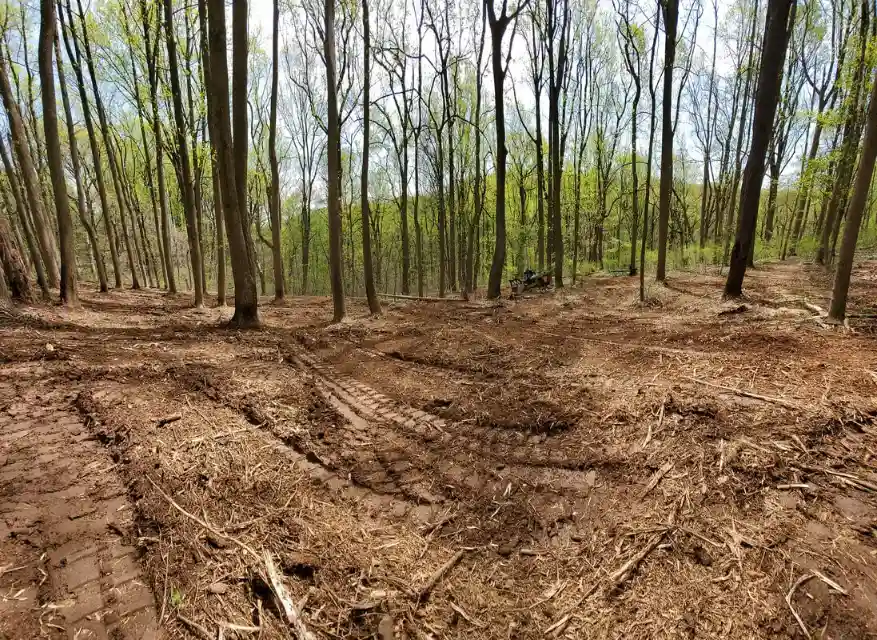
Forestry mulching is a land clearing method that uses one machine to cut, grind, and spread vegetation in a single pass. Instead of cutting trees and hauling debris away, the machine shreds everything on the spot and leaves it behind as a natural mulch layer.
That layer is not waste. It shields the soil from erosion, holds in moisture, and returns nutrients as it decomposes, much like shredded bark mulch does in a garden bed. Your land gets cleared and fed at the same time.
How a Forestry Mulcher Works
The work is done by a mulching head fitted with a drum that spins at over 2,000 RPM. Carbide steel teeth on the drum shred standing trees, brush, saplings, and stumps into small chips on contact.
There are two main head types:
- Horizontal shaft mulchers: The most common type. The drum runs parallel to the ground and suits most land clearing jobs.
- Vertical shaft mulchers: Less common in forestry work and better suited to specific terrain types.
The head mounts on a carrier machine. Professionals prefer tracked carriers over wheeled ones because they spread the weight evenly, compact the soil less, and handle slopes and wet ground better. For a closer look at the equipment itself, see our Baumalight mulcher guide.
Most professional machines handle trees up to 6 to 12 inches in diameter. Larger trees are usually felled by chainsaw first, then mulched.
What Happens on Your Property, Step by Step
- Site walk: You and the contractor walk the property and decide what stays and what goes. Trees you want to keep get flagged with tape.
- Hazard check: The operator looks for buried utilities, old fence wire, large rocks, or anything the machine cannot safely process.
- Clearing: The machine works through the property systematically, usually faster than most people expect.
- Mulch spread on site: Shredded vegetation lands directly on the ground as the machine moves, so clearing and cleanup happen at the same time.
- Final walk-through: The contractor walks the cleared area with you to confirm the job matches what was agreed.
No haul trucks, no burn piles, and no second visit for cleanup.
Forestry Mulching vs. Traditional Land Clearing
Forestry mulching protects the soil and often costs less overall, while bulldozing is the better fit when you need bare, graded ground for construction.
Factor | Forestry Mulching | Bulldozing / Traditional Clearing |
|---|---|---|
Soil disturbance | Minimal. Roots stay in place. | Major. Bare soil exposed to erosion. |
Speed | 1 to 4 acres per day | Multiple stages, multiple crews |
Debris removal | Not needed. Mulch stays on site. | Required. Hauling adds significant cost. |
Burn permits | Not needed | Often required in many US states |
Erosion risk | Low. Mulch layer protects soil. | High. Bare ground washes easily. |
Topsoil health | Preserved and improved over time | Disrupted and often stripped |
Best for | Brush, small trees, selective clearing | Full site grading, large commercial prep |
Cost profile | More predictable, often lower overall | Can escalate with hauling and labor |
When Forestry Mulching Is the Right Choice
Forestry mulching is the go-to method when you want to reclaim overgrown land without wrecking the soil underneath:
- Overgrown residential lots and rural acreage
- Hunting land improvement and wildlife habitat restoration
- Fence line and property line clearing
- Fire breaks and wildfire prevention on wooded properties
- Trail and access road creation
- Right-of-way clearing for utilities and pipelines
- Invasive species control and removal
- Storm debris cleanup
When Traditional Clearing Makes More Sense
Bulldozing or excavating is the better choice when:
- You need the ground fully stripped and graded for a building foundation
- You have dense, mature hardwood timber that can be sold for value
- The project requires full root removal below grade for construction
An honest contractor will tell you this during the estimate. If someone claims forestry mulching fits every job, treat it as a red flag.
Benefits of Forestry Mulching
The three biggest advantages are speed, healthier soil, and the ability to work on ground other machines struggle with.
Faster Clearing With One Machine
One machine replaces the chainsaw crew, the haul trucks, and the burn day. A skilled operator can clear 1 to 4 acres in a single day, depending on vegetation density and terrain. That speed cuts your labor costs and gets your land usable sooner.
Healthier Soil and Less Erosion
Bulldozing exposes bare soil to rain and wind, which starts soil erosion almost immediately. Forestry mulching leaves roots in the ground to anchor the soil, and the mulch layer softens rainfall and slows runoff. It is the same principle behind using mulch for erosion control on slopes and bare patches.
As the mulch decomposes over 12 to 24 months, it returns carbon and nutrients to the soil. To see how that timeline compares with other materials, check our guide on how long mulch lasts by type.
Works on Slopes and Tight Spaces
Compact tracked machines work around structures, along fence lines, and between trees you want to keep. They also handle slopes without tearing up the ground, which makes forestry mulching a smart first step before landscaping a sloped yard.
How Much Does Forestry Mulching Cost in 2026?
Most homeowners spend $1,000 to $4,000 on a typical project, based on data from Angi and HomeAdvisor. Larger rural acreage jobs are quoted after a site visit.
Cost per Acre
Vegetation type | Cost per acre (2026) |
|---|---|
Light brush and grassland | $400 to $850 |
Moderate brush and small trees | $800 to $1,200 |
Dense brush with hardwoods | $1,200 to $2,000 or more |
Hourly rates generally run $125 to $300 per hour. Contractors use hourly pricing for small or complex jobs where per-acre pricing does not make sense.
What Raises or Lowers Your Quote
- Vegetation density: Thicker brush and larger trees take longer and wear the equipment harder.
- Terrain: Steep slopes, rocky ground, or tight access points add machine time and risk.
- Tree diameter: Trees beyond the 6 to 12 inch range may need chainsaw felling first, which adds labor.
- Mobilization: Remote properties may carry an extra fee to move the equipment to your site.
- Permits: Some counties require land clearing or land disturbance permits. Budget $100 to $500, depending on your location and project size.
Because price depends on what is actually on your land, never accept a phone quote. A reputable service will offer a free on-site estimate before giving you a number.
How to Hire a Forestry Mulching Service Near You
The best local contractors use tracked equipment, carry general liability insurance, show before and after photos of similar jobs, and walk your property before quoting. They should also know the vegetation and terrain common in your area.
Questions to Ask Before You Hire
- What type of equipment will you use on my property, and why?
- Can you show me proof of insurance coverage?
- Have you worked on properties with similar vegetation and terrain?
- Do you offer a free on-site estimate before quoting a price?
- Will the mulch layer be spread evenly, or will some areas need extra passes?
- Are there any permit requirements in my county I should know about?
Red Flags to Avoid
- Unusually low bids: A quote far below the others often means weaker equipment or thin insurance coverage.
- No site visit: A contractor quoting without seeing your land is guessing, and guesses turn into disputes.
- Vague pricing: Get all pricing in writing before work starts. “We will see how it goes” is not a price.
- No proof of insurance: Heavy machinery on your property without liability coverage puts you at legal and financial risk.
Forestry Mulching FAQs
Does forestry mulching remove stumps and roots?
A forestry mulcher grinds stumps flush with the ground but leaves the root system in place. Those roots help hold the soil and limit erosion. If you plan to build a foundation or need stumps removed below grade, you will also need a dedicated stump grinder.
How long does it take to clear one acre?
Light brush can take just a few hours per acre. Dense hardwoods on uneven terrain can take a full day or more. On average, a professional clears 1 to 4 acres per day, far faster than multi-crew traditional clearing.
Can forestry mulching be done in wet or winter conditions?
Yes, in most weather. The exception is saturated clay soil, which compacts under the machine and can leave ruts that take years to smooth out. Experienced contractors check soil conditions first and may wait a few days after heavy rain. Work on frozen ground is generally fine.
Will the leftover mulch attract pests?
Not usually, as long as the mulch is spread evenly. Problems start when it piles up in thick spots, so ask the operator for another pass anywhere it is deeper than 3 to 4 inches, the same depth rule covered in our guide on how deep mulch should be. Wood-boring insects are drawn to freshly cut wood in the first season and become less of a concern as the mulch breaks down. If termites are your worry, read does mulch attract termites before you hire.
Final Thoughts
Forestry mulching clears land in one pass, protects your topsoil, and often costs less than bulldozing once hauling and burning are factored in. Before you hire, get more than one on-site estimate, confirm insurance, and agree on pricing in writing.
Once your land is clear, you can start a lawn from scratch or compare hydroseeding costs to get grass established quickly.
About Author
Khalid Fazal is a seasoned lawn care specialist and horticultural researcher with over 15 years of hands-on experience transforming challenging landscapes into lush, resilient green spaces. His journey didn’t start in a lab, but in a backyard full of stubborn, cracked clay that “experts” said would never grow a healthy blade of grass. Refusing to accept a yard full of dust, Khalid spent years experimenting with organic soil restoration and precise mulching, eventually turning that wasteland into a neighborhood showpiece on a shoestring budget.
From mastering core aeration techniques to optimizing soil pH for specialized turf varieties, Khalid’s approach combines old-school grit with modern agronomic science. He founded Gen Lawn to provide homeowners with honest, research-backed advice that prioritizes long-term soil health over quick-fix chemical solutions. When he isn’t analyzing soil profiles, he’s developing precision tools to help others achieve professional results without the professional price tag.

How to Get Rid of Japanese Beetles (What Actually Works)
Table of Contents Home / By Khalid Fazal | Updated:...
Read More
Chinch Bug Treatment: What Works and When to Apply by Region
Table of Contents Home / By Khalid Fazal | Updated:...
Read More
How Do I Get Rid of Ants in My Lawn? And get rid of the Colony
Table of Contents Home / By Khalid Fazal | Updated:...
Read More
Best Fungicide for Lawns: 6 Picks Matched to Your Disease
Table of Contents Home / By Khalid Fazal | Updated:...
Read More