Hardscape Patio: Design, Costs and How to Find the Right Contractor in 2026
Your backyard has been sitting there for years. Maybe it’s a muddy patch that floods after every rain, a grassy strip you never actually use, or just dead square footage that adds nothing to your daily life.
Here’s the thing: that neglected outdoor space is costing you more than you realize.
Homeowners who invest in a quality hardscape patio recoup over 80% of that cost at resale, according to Angi. On top of that, well-executed hardscaping can boost your overall home value by 15% to 20%. Every year you wait, you’re leaving real equity on the table.
A hardscape patio fixes all of that. It turns an unused backyard into functional outdoor living space you’ll actually use, while adding lasting value to your property. This guide walks you through everything: materials, real costs, design ideas for every budget, and how to hire a contractor you can actually trust.
What Is a Hardscape Patio and Why Is It Worth the Investment?
Before you start planning, it helps to understand exactly what you’re working with.
Hardscape vs Softscape: Understanding the Difference
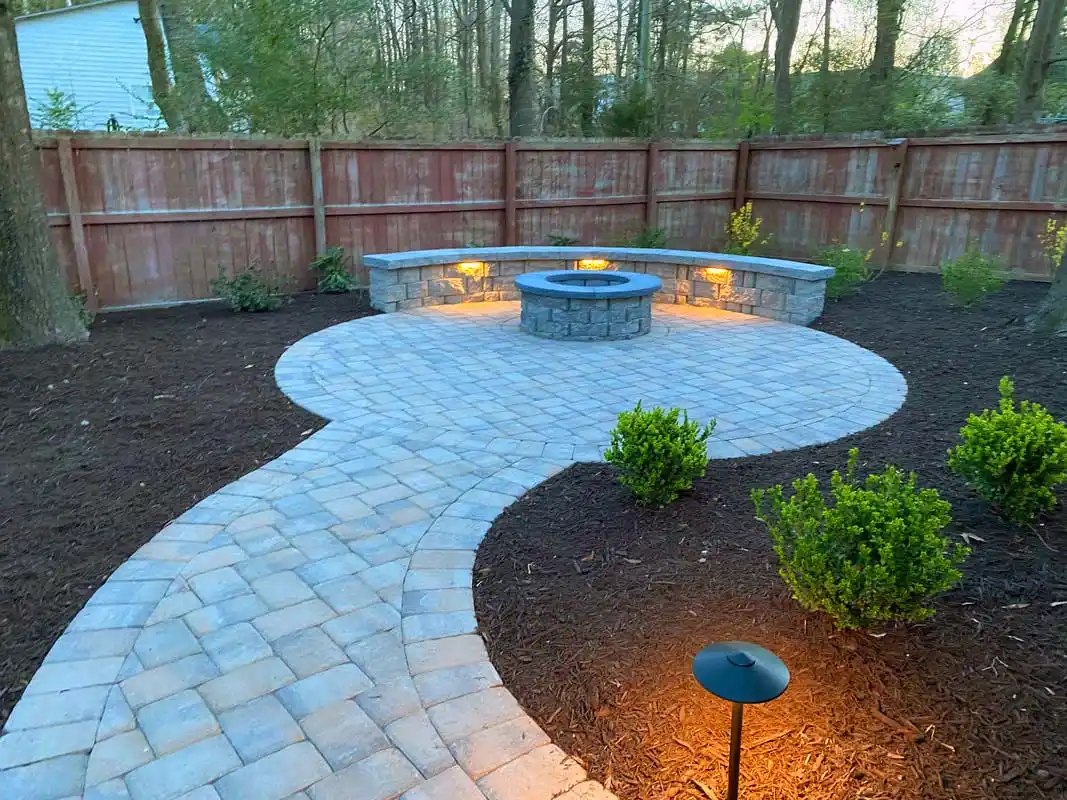
A hardscape refers to all the non-living structural elements in your outdoor space. Patios, walkways, retaining walls, driveways, and fire pits all fall under this category. They’re built from hard materials like stone, concrete, pavers, or brick.
Softscape is the living side: grass, trees, shrubs, flowers, and garden beds. The two work best together. Your hardscape patio gives the yard structure and function, while softscape elements add life and warmth around it.
Think of hardscape as the skeleton of your outdoor space. Softscape is what makes it feel alive.
The Real Value a Hardscape Patio Adds to Your Home
This is where it gets interesting for any homeowner thinking about long-term property value.
According to data from Angi, patios deliver over 80% ROI (Return on Investment) at resale. If you spend $10,000 on a hardscape patio, you’re adding roughly $8,000 or more in home equity. Multiple real estate studies confirm that well-designed hardscaping can boost home value by 15% to 20%.
Here’s why that matters right now: outdoor living spaces have become one of the top features buyers look for. A finished patio signals a well-maintained home and eliminates a project the buyer would otherwise have to take on themselves. Buyers pay for that convenience.
And beyond resale, there’s the lifestyle value. Morning coffee on a clean stone surface. Hosting dinners outside without worrying about muddy shoes. Having a low-maintenance outdoor space that works year-round.
Hardscape Patio Materials: Which One Is Right for You?
This decision shapes everything else: your budget, your maintenance requirements, your design options, and how the patio performs 15 years from now. Let’s break it down by material.
Concrete Pavers: The Top Choice for Most Homeowners
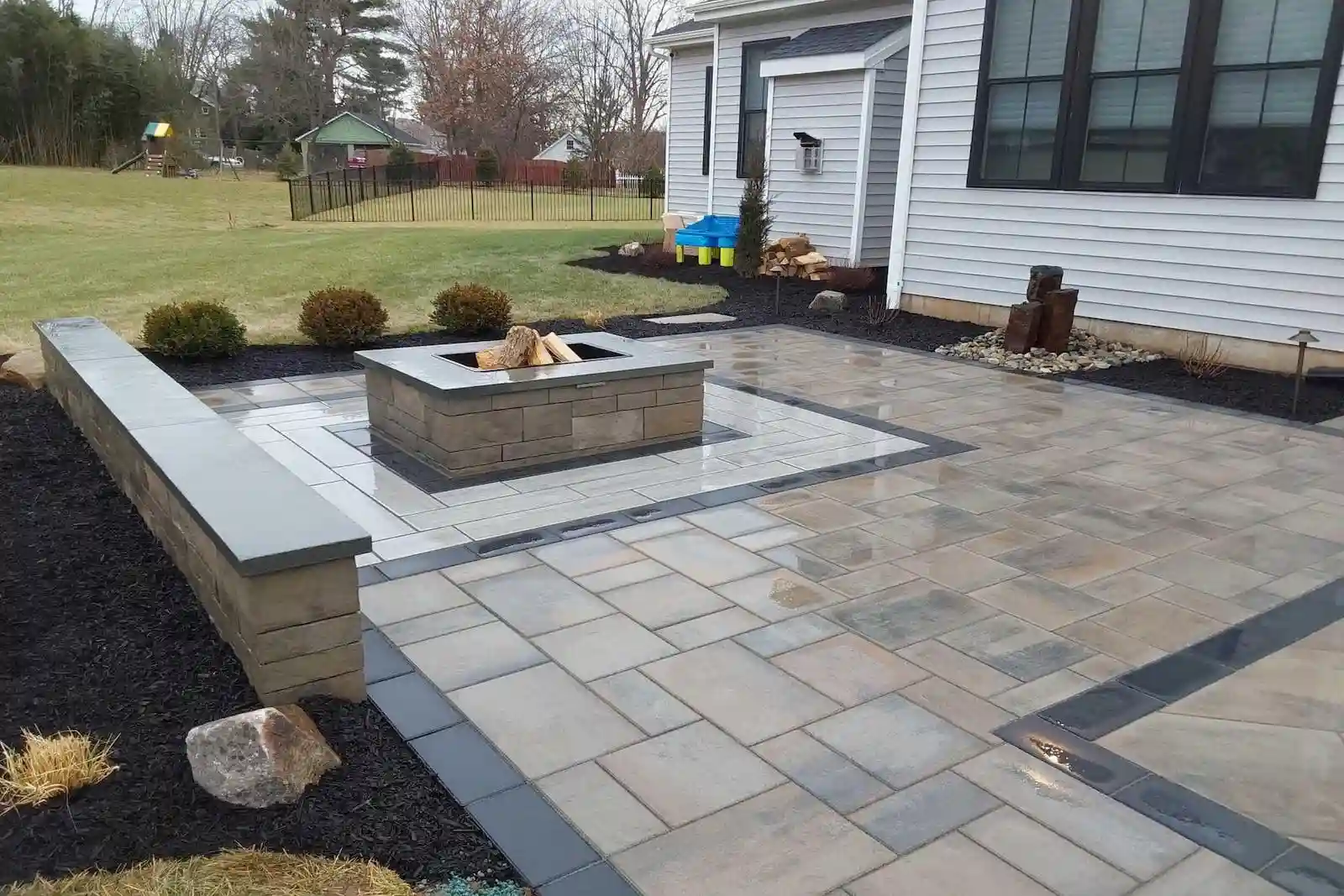
Concrete pavers are the most popular hardscape patio material in the US, and for good reason. They come in a wide range of shapes, sizes, and colors. You can lay them in patterns like herringbone, basketweave, or large-format squares. And if one paver cracks or chips, you replace just that piece, not the entire surface.
Installed costs run roughly $12 to $28 per square foot. With proper sealing, concrete pavers last up to 30 years. They’re also one of the best options for regions with harsh winters because individual pavers can flex during freeze-thaw cycles instead of cracking the way solid poured concrete does.
One downside worth knowing: without a sealant, pavers can absorb stains over time. Sealing every two to three years solves this completely.
Natural Stone: Premium Look, Premium Price
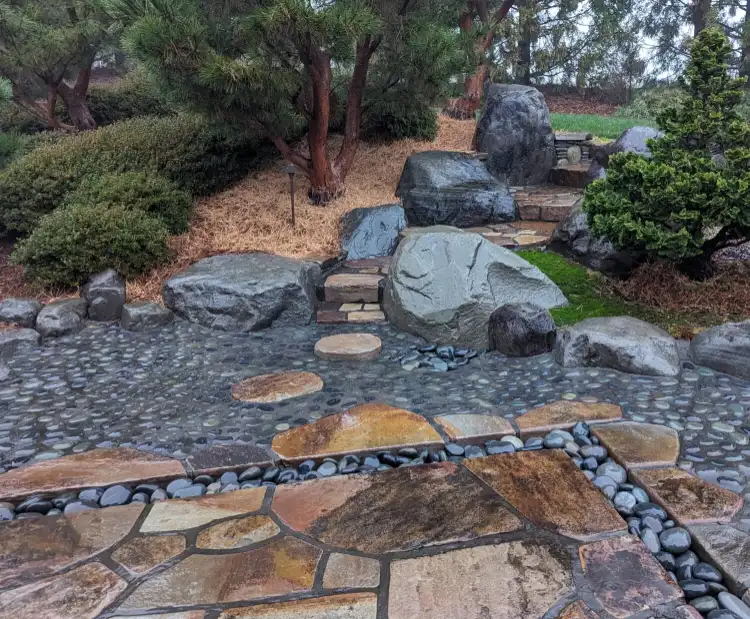
Natural stone, including flagstone, slate, travertine, and bluestone, delivers a look that no manufactured material can fully replicate. Every slab is unique. The texture, color variation, and natural character are things concrete simply cannot match.
The tradeoff is cost. Natural stone typically runs double what concrete pavers do, with installed prices ranging from $18 to $45 per square foot or higher depending on the stone type. Installation is also more labor-intensive, which adds to the labor portion of your bill.
If your budget has room and you want the most upscale, timeless finish possible, natural stone is the clear winner.
Brick: Classic, Durable and Built to Last
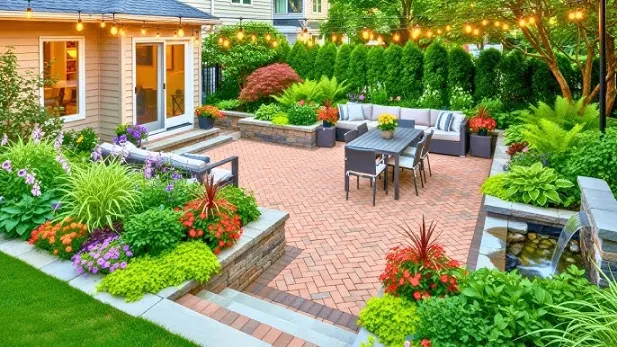
Brick has been used in outdoor paving for centuries, and it still looks sharp today. It’s eco-friendly, long-lasting, and works beautifully with traditional and historic home styles. Installed costs typically land between $15 and $35 per square foot.
One thing to keep in mind: brick can become slippery when wet, so surface texture matters if you’re using it near a pool or in a high-traffic area. It also offers fewer design variations than concrete pavers when it comes to colors and shapes.
But here’s the upside: if you want a material that won’t look dated in 25 years, brick delivers that consistency every time.
Stamped Concrete: Budget-Friendly Aesthetics
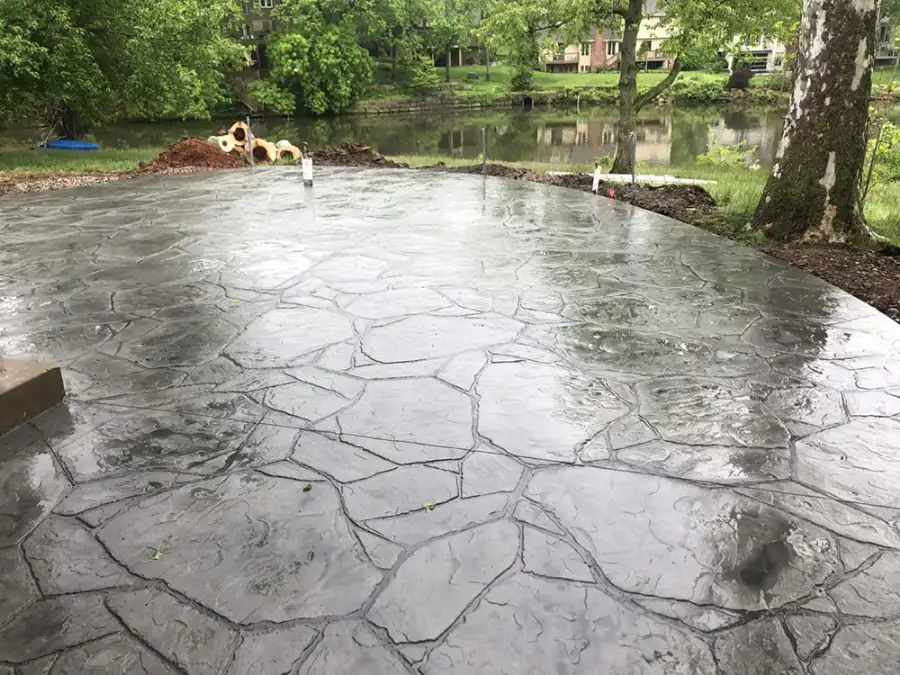
Stamped concrete is poured concrete that has been textured and colored to mimic the look of stone, brick, or tile. It’s one of the more affordable options, running $8 to $28 per square foot installed, and the visual results can be genuinely impressive at that price point.
But wait: if it cracks, repairs are hard to blend seamlessly. This is especially true in climates with harsh winters where freeze-thaw cycles stress a solid slab. Unlike pavers, you cannot swap out a single damaged section. Repairs often involve patching that rarely matches the original perfectly.
Stamped concrete makes sense for mild climates and tighter budgets. For homeowners in northern states, concrete pavers are usually the smarter long-term investment.
Hardscape Patio Material Comparison
| Material | Installed Cost Per Sq Ft | Lifespan | Cold Climate Performance | Maintenance Level | Best For |
|---|---|---|---|---|---|
| Concrete Pavers | $12-$28 | 30+ years | Excellent | Low-Medium | Most homeowners |
| Natural Stone | $18-$45+ | 40+ years | Good | Low | Premium installs |
| Brick | $15-$35 | 30+ years | Good | Low | Traditional homes |
| Stamped Concrete | $8-$28 | 15-25 years | Poor-Fair | Medium | Mild climates, tight budgets |
How Much Does a Hardscape Patio Cost in 2026?
Here’s what most homeowners get wrong: they budget for the materials and forget everything else that goes into the project.
According to HomeAdvisor, building a patio costs most homeowners between $2,028 and $6,088, with a national average of $4,005. Larger or more complex projects can climb to $18,000 or beyond.
Cost by Project Size
| Project Size | Approximate Square Footage | Estimated Pro-Installed Cost |
|---|---|---|
| Small | 100-150 sq ft | $2,000-$5,000 |
| Medium | 200-300 sq ft | $5,000-$10,000 |
| Large | 400+ sq ft | $10,000-$20,000+ |
What Drives the Price Up or Down
The material is only part of the equation. Here’s what actually controls your final cost:
Experienced contractors will tell you that the pavers themselves account for only about 20% of the total project budget. The other 80% covers labor, excavation, base preparation, and drainage. Think of it like an iceberg: most of the real cost is below the surface.
Here’s what else moves the number significantly:
- Site slope and access: A flat yard costs less to work on than a sloped one. Difficult access, like a narrow side yard, adds labor time.
- Base depth: Most hardscape patios require 6 to 8 inches of compacted aggregate base beneath the pavers. Skimping here causes settling and uneven surfaces over time.
- Drainage planning: Poor drainage turns a beautiful patio into a flooding problem after every rain. A proper grading plan adds cost upfront but protects your investment for decades.
- Permits: Some jurisdictions require permits for hardscape projects, particularly when the work involves drainage changes or retaining walls. Permit costs typically run $150 to $500 depending on location. Always check with your local building department before breaking ground.
- Regional labor rates: According to Bureau of Labor Statistics data, wages for landscaping and groundskeeping workers range from around $18 per hour in markets like Dallas to over $23 per hour in cities like Boston. Where you live directly affects what you pay.
DIY vs Hiring a Hardscape Patio Pro: Honest Breakdown
Can you DIY a hardscape patio? Yes. Should you? That depends on the size and complexity of the project.
A basic 200 square foot paver patio done yourself will cost roughly $2,300 to $3,500 in materials and equipment rental. The same job done professionally runs $3,000 to $6,000. The savings are real, but so is the margin for error.
Here’s the risk: a poorly compacted base leads to sinking, uneven surfaces, and drainage problems that are expensive to correct after the fact. If this is your first hardscape project, start small and stick to a simple, rectangular layout. For a full breakdown of what the installation process involves, the Hardscape Installation Guide covers every step in detail.
Hardscape Patio Design Ideas for Every Style and Space
The patio surface is just the starting point. How you design it and what you place around it is what transforms a slab of pavers into a genuine outdoor living space.
Small Backyard Hardscape Patio Ideas
Small does not mean limited. A well-planned 100 to 150 square foot patio can comfortably seat four to six people and still feel spacious if the layout is smart.
A few ideas that consistently work in tight spaces:
- Use large-format pavers to make the area feel bigger. Fewer seam lines visually open up the space.
- Build a low seating wall instead of adding extra furniture. It doubles as a boundary and saves floor space.
- Frame the patio with vertical plants like tall ornamental grasses or potted evergreens. These create a sense of enclosure without taking up square footage.
If your yard has a slope, do not overlook the opportunity. Sloped backyards can be terraced into multiple flat patio levels, often creating more usable space than a flat yard would naturally offer.
Modern vs Traditional Hardscape Patio Styles in 2026
The biggest design shift in 2026 is the move toward what designers are calling the “outdoor room.” Homeowners are no longer laying a flat surface and stopping there. They’re creating defined zones within the same patio footprint: a cooking area, a dining area, and a lounging area, all connected by the hardscape.
Modern hardscape patio style currently favors:
- Large-format pavers with clean edges and minimal grout spacing
- Neutral color palettes: slate gray, warm beige, off-white
- Geometric layouts with sharp, defined lines
- Built-in lighting along seating walls and step edges
Traditional style continues to work well with:
- Natural stone or brick with visible texture and character
- Warmer tones: terracotta, rust brown, slate
- Curved patio edges that soften the transition into planted beds
- Mixed materials that reference the home’s existing architecture
Neither approach is objectively better. The right choice is the one that fits how your home looks and how you plan to use the space.
Hardscape Patio Add-Ons Worth the Investment
Once the base patio is in, a few well-chosen additions can dramatically increase how much you use it and how much it increases your property value:
- Fire pit or fire table: According to Angi, fire features return 67% to 80% ROI and extend your usable season by weeks on each end. Built-in fire features perform better than portable ones at resale.
- Seating walls: Built from the same material as your patio, these eliminate the need for bulky outdoor furniture and create a finished, cohesive look.
- Outdoor kitchen: Higher upfront cost, but one of the strongest ROI performers in the entire outdoor improvement category.
- Clean landscape edging: Defined edges between your patio and surrounding lawn instantly make the whole yard look more intentional and polished. These landscape edging ideas cover options at every price point.
- Mulched planting beds: Framing your hardscape with properly installed mulch beds softens the overall look and balances the structure. This combination of hardscape and softscape is what separates a professionally finished yard from a DIY result.
How to Find and Hire a Hardscape Patio Contractor Near You
Here is an uncomfortable truth: nearly 50% of homeowners report bad experiences with contractors, according to Signature Landscape’s contractor research. Knowing what to verify before you sign anything is the most important step in the entire process.
Credentials to Look For in a Hardscape Contractor
Not every state requires a specific landscape contractor license, but verifying the following protects you in any location:
Active state license: Ask for the license number and verify it is current. Most states have an online portal where you can check contractor status in two minutes. Lowe’s contractor hiring guide outlines what questions to ask depending on your project type.
COI (Certificate of Insurance): A Certificate of Insurance confirms the contractor carries both general liability coverage and workers’ compensation. Without it, you could be held financially responsible for on-site injuries or property damage.
ICPI Certification: ICPI stands for Interlocking Concrete Pavement Institute. It is the leading professional certification body for paver installation in the US. An ICPI-certified installer has been formally trained in base preparation, drainage planning, and proper installation standards. For any paver patio project, this certification is a strong signal of quality.
5 Questions to Ask Before Signing a Hardscape Contract
These five questions separate quality contractors from cut-rate operations:
- Can you show me photos or references from projects at least two years old? Recent photos look good. Older projects show how the work actually holds up.
- What does your base preparation process look like, specifically? A solid answer covers excavation depth, compaction in layers, and drainage planning. A vague answer is a warning sign.
- What workmanship warranty do you offer? Look for a minimum five-year labor warranty. Materials often carry separate manufacturer warranties.
- Who does the physical installation: your own crew or subcontractors? Subcontractors are not always covered under the main contractor’s insurance policy.
- Will you provide a written scope of work before I sign anything? A detailed written scope protects you from vague agreements, unanticipated charges, and scope creep mid-project.
Red Flags That Should Send You Looking Elsewhere
Watch out for these warning signs before you commit:
- Requests a large upfront deposit. A reasonable deposit is 10% or less of the total project cost.
- Cannot provide proof of insurance immediately when asked.
- Gives you a written quote without visiting the site first.
- Creates urgency by claiming a limited-time price that expires soon.
- Has no portfolio of completed work older than six months.
The bottom line: a professional hardscape patio contractor welcomes your questions. If they push back, get evasive, or cannot answer the basics confidently, keep looking.
Frequently Asked Questions About Hardscape Patios
How Long Does a Hardscape Patio Last?
Most hardscape patios last 25 to 40 years with proper installation and maintenance. Concrete pavers and natural stone tend to have the longest lifespans when sealed regularly. The single biggest factor in longevity is the quality of the base beneath the surface, not the surface material itself. A well-built base is what prevents settling, shifting, and drainage problems over time.
Do I Need a Permit for a Hardscape Patio?
It depends on your local municipality and project scope. Many jurisdictions require permits for patios above a certain square footage, or for any project that includes drainage changes, retaining walls, or outdoor utility connections. Check with your local building and permitting department before starting. A reputable contractor will handle or advise on the permitting process as part of their service.
What Is the Best Hardscape Patio Material for Cold Climates?
Concrete pavers are the top recommendation for cold-weather regions. Individual paver units flex slightly during freeze-thaw cycles without cracking the surface, which is a critical advantage over poured concrete or stamped concrete slabs. Natural stone is also a good performer in cold climates when properly installed. Stamped concrete is generally not recommended for harsh winter regions because surface cracks are difficult to repair without visible patching.
Can I DIY a Hardscape Patio?
Yes, a basic paver patio is one of the more accessible DIY hardscape projects for a motivated homeowner. You will need to rent equipment including a plate compactor and masonry saw. The most common and costly DIY mistakes are insufficient base depth and inadequate edge restraints, both of which cause pavers to shift over time. For a first project, choose a small rectangular layout and follow base preparation guidelines carefully before anything else.
How Do I Maintain a Hardscape Patio Long-Term?
Basic patio maintenance is manageable and inexpensive compared to the ongoing cost of maintaining a lawn:
- Reseal pavers or concrete every two to three years to protect color and prevent staining
- Re-sand joints annually if using polymeric sand between pavers, since it locks units in place and suppresses weed growth
- Power wash the surface once or twice per year to remove debris, surface algae, and staining
- Check for any minor settling or shifting after the first winter season and address it early before the problem compounds
Key Takeaways
A hardscape patio is one of the strongest outdoor investments you can make, in both lifestyle and property value. Here is what to carry forward from this guide:
- Hardscape patios return over 80% ROI at resale and can add 15% to 20% to your home’s overall value
- Concrete pavers are the most versatile, durable, and widely recommended choice for most US climates
- Total installed project costs run from $2,000 for small patios to $18,000 or more for larger, complex designs
- Roughly 80% of your budget goes into labor, excavation, and base preparation, not just the surface material
- Always verify license, active insurance (COI), and ICPI certification before hiring a contractor
- Ask for references from projects at least two years old, a written scope, and a five-year workmanship warranty minimum
Ready to move forward? Get at least three quotes from licensed local hardscape patio contractors and compare them against a detailed written scope. The more specific you are upfront about your design, materials, and budget, the more accurate and comparable your estimates will be.
Sources and References
- Angi: Hardscape Features That Add Value to Your Home
- Angi: What Does Hardscaping Cost in 2026?
- HomeAdvisor: How Much Does a Patio Cost to Build?
- Tomahawk Power: 2026 Paver Patio Cost Guide
- Signature Landscape: 15 Questions to Ask a Hardscape Contractor
- ICPI: Interlocking Concrete Pavement Institute
- Bureau of Labor Statistics: Landscaping and Groundskeeping Workers
- Lowe’s: Questions to Ask Before Hiring a Hardscape Contractor
- Investopedia: Certificate of Insurance Explained
- MSE Hardscapes: The ROI of Hardscaping
About Author
Khalid Fazal is a seasoned lawn care specialist and horticultural researcher with over 15 years of hands-on experience transforming challenging landscapes into lush, resilient green spaces. His journey didn’t start in a lab, but in a backyard full of stubborn, cracked clay that “experts” said would never grow a healthy blade of grass. Refusing to accept a yard full of dust, Khalid spent years experimenting with organic soil restoration and precise mulching, eventually turning that wasteland into a neighborhood showpiece on a shoestring budget.
From mastering core aeration techniques to optimizing soil pH for specialized turf varieties, Khalid’s approach combines old-school grit with modern agronomic science. He founded Gen Lawn to provide homeowners with honest, research-backed advice that prioritizes long-term soil health over quick-fix chemical solutions. When he isn’t analyzing soil profiles, he’s developing precision tools to help others achieve professional results without the professional price tag.

Best Fungicide for Lawns: 6 Picks Matched to Your Disease
Table of Contents Home / By Khalid Fazal | Updated:...
Read More
Snow Mold Patches After the Melt? Most Recover in 3 Weeks
Table of Contents Home / By Khalid Fazal | Updated:...
Read More
Dollar Spot Fungus: Fix It Without Fungicide (By Region)
Table of Contents Home / By Khalid Fazal | Updated:...
Read More
Best Weed and Feed for Lawns: 7 Picks by Grass Type [2026]
Table of Contents Home / By Khalid Fazal | Updated:...
Read More